Die Flaschen standen während der letzten 2 Wochen am Küchenfenster um reiften fleissig vor sich hin. Nun wird es Zeit für die finale Verkostung des Ergebnisses des kleinen Self-Reifungsexperiments.
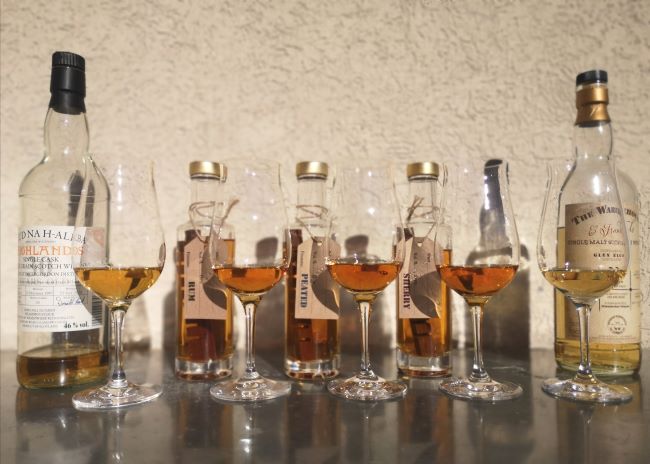
Sherry Probe
Beim Sherry war die Basis der Glen Elgin 11y WW8 mit einem höheren Alkoholgehalt von 58,1%. Dadurch sollte es zu einer ordentlichen Übertragung der Aromen auf das Ausgangsdestillat gekommen sein.
Aussehen
Farbe dunkles Rotgold.
Nase
Deutlich mehr Vanille im Geruch als im Original. Rote Früchte und leichte Aromen von Pflaumen, Heidelbeere, Erdbeere und Himbeere. Der grüne Apfel vom Original hat sich in einen saftigen roten gewandelt. Die Citrusnoten gehen nun eher in Richtung der Orange. Also deutlich dunkelfruchtiger als der eigentliche Basismalt vorher.
Geschmack
Zur anfänglichen starken Puderzuckersüße gesellt sich nun auch im Mund deutlich Vanille dazu. Insgesamt ist der Whisky weicher im Mund, der hohe Alkoholgehalt ist spürbar zahmer am Gaumen. Die Früchte sind dunkler, weniger auf der Zitronenseite. Roter Apfel und Beeren, wie in der Nase. Auch die Orange ist vorhanden. Auch etwas Nuss und Würze ist vorhanden.
Abgang
Auch im Finish rundet das Staves die Aromen ab. Die Eiche ist nicht so deutlich sondern eher Richtung Milchschokolade. Die Vanille bleibt, der Apfel ist rot mit Schale.
Fazit
Die Aromen vom originalen Malt sind weiterhin vorhanden, jedoch teilweise nach hinten gedrückt. Weicher mit mehr Vanille und anderen Fruchtaromen sowie etwas Nuss ist die Sherry Stave Version. Trotz der Reifezeit von etwas mehr als 2 Wochen und dem hohen Alkoholgehalt vom Basisdestillat schlägt die Eichenfracht nicht über. Eventuell hat der Standplatz am Küchenfenster, wo es doch kühler ist, die Reifung etwas beeinflusst.
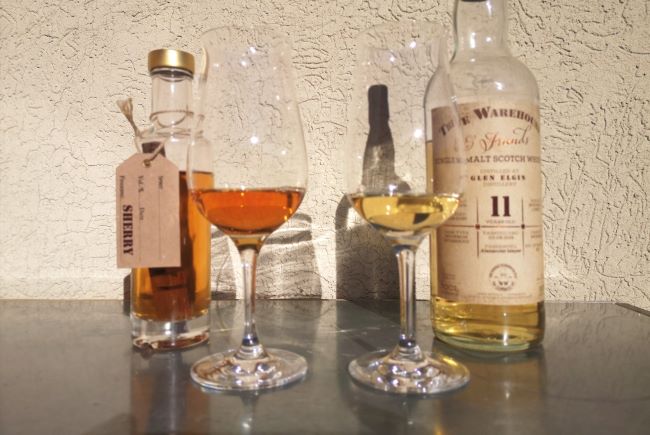 |
| Die Farbe hat sich bei Sherry Sample stark verändert |
Bei den anderen beiden Samples verwendete ich den Invergordon 1987 MBI. Dieser Single Grain hat 46% Alkoholgehalt und ist in einem Ex-Bourbon Hoghead gereift.
Rum Probe
Aussehen
Farbe heller Bernstein
Nase
Die beim Original anfänglich dominante Malz- und Getreidenote tritt nun deutlich in den Hintergrund. Es übernehmen Vanille-, Rosinen- und Fruchtaromen wie Honigmelone, Marille und Pfirsich. Alkoholeinfluss ist reduziert - kein Stechen in der Nase. Hinten heraus mehr Einfluss vom Holz mit mehr Würze.
Geschmack
Deutliche Süße mit Rosinen und Vanille. Vor allem diese Honigsüße bleibt die ganze Zeit präsent. Von der pfeffrigen Schärfe des Originals ist nichts zu merken. Dafür mehr Frucht und etwas Würze vom Holz.
Abgang
Die Süße ist weiterhin anhaltend, dazu eine aromatische Holzfracht mit der Rosine und der Frucht. Vielleicht sogar etwas länger im Finish als das Original.
Fazit
Also hier glaubt man wirklich einen anderen Whisky vor sich zu haben. Die Nachreifung durch den Rum Stave hat beim Grain wirklich deutlich für eine positive geschmackliche Veränderung gesorgt. Er ist fruchtiger und süßer geworden, die Malz-, Getreidenote wurde abgeschliffen.
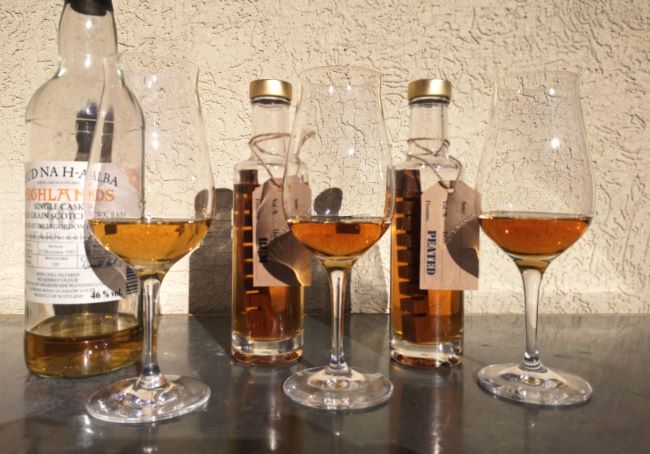 |
| Auch die Rum & Peat Staves haben ordentlich Aromen und Farbe abgegeben. |
Peat Sample
Aussehen
Farbe ist dunkles Gold bzw. helles Bernstein
Nase
Der Geruch ist, im Vergleich zur Rum-Variante, dem Original noch sehr ähnlich. Vom Rauch nehme ich nicht so viel wahr. Eher dezent im Hintergrund ist vielleicht etwas Rauch von einem verkohlten Holzstück zu erkennen. Aber nicht aufdringlich. Ansonsten mehr Würzigkeit und die Zitrone und die Ananas vom Original sind weniger präsent.
Geschmack
War der Torfrauch im Geruch im Hintergrund, ist er im Mund umso stärker präsent. Zusammen mit einer Süße und Würzigkeit, wandelt sich der Rauch jetzt von der Holzkohle eher zu einem kalten Aschenbecher. Fruchtseitig plötzlich deutlich mehr Aromen vorhanden als bei der Originalversion. Interessant, doch anders als das Original.
Abgang
Länger anhaltend und der Peat gibt den Ton an. Mehr Würzigkeit, aber nicht Richtung Holz und Bitterkeit, eher mehr Küchenkräuter. Nette Kombo mit einer angenehmen Süße.
Fazit
In der Nase ist der Rauch für mich noch nicht der Keyplayer, ändert sich dies doch im Geschmack. Hier ist er deutlich zu merken und hier drückt der Peat Stave dem Grain auch seinen Stempel auf.
Gesamtfazit
Am meisten überrascht hat mich die Rum Variante, die für mich persönlich dem Grain Whisky am meisten positiv nach vorne gebracht hat.
Alle drei verschiedenen Staves haben ihre individuellen Aromencharakteristikas sehr gut an das Destillat weitergegeben. Es hängt natürlich immer von der Basisspirituose und von der Zeit ab, die man den Staves für die Reifezeit gibt, wieviel sich verändert.
Ein für mich gelungenes Experiment. Würde ich es wieder machen? Nochmals das Set würde ich mir wahrscheinlich nicht zulegen.
Soak Staves hat in der Zwischenzeit jedoch Einzelflaschensets der Soak Staves um je € 12,50 ins Portfolio aufgenommen. Und dies ist sicherlich eine interessante Möglichkeit, etwaige Whiskys, die einem vielleicht doch nicht so zusagen im Aroma und Charakter zu verändern. Und das kann ich mir gut vorstellen, nochmals auszuprobieren - vor allem das Rum-Finish :-)
Generell ist diese sicherlich etwas vor allem für Nerds wie mich, die sich intensiv mit dem Thema Reifung, Geschmack und Spirituosen beschäftigen. Aber auch für den Otto-Normalgeniesser ist das Set, zum Beispiel als Vatertagsgeschenk, ein interessantes Experiment.
--------------------------------------------------------------------------------------------------------------------------------
The bottles have been standing at the kitchen window for the last 2 weeks, ripening diligently. Now it's time for the final tasting of the result of the little self-maturing experiment.
Sherry tasting
For the sherry, the base was Glen Elgin 11y WW8 with a higher alcohol content of 58.1%. This should have resulted in a decent transfer of flavours to the base distillate.
Appearance
Colour dark red gold.
Nose
Clearly more vanilla in the smell than in the original. Red fruits and light aromas of plum, blueberry, strawberry and raspberry. The green apple from the original has changed to a juicy red. The citrus notes now go more in the direction of orange. So clearly darker fruity than the actual base malt before.
Taste
The initial strong icing sugar sweetness is now joined by a distinct vanilla in the mouth. Overall, the whisky is softer in the mouth, the high alcohol content is noticeably tamer on the palate. The fruits are darker, less on the lemon side. Red apple and berries, as in the nose. Orange is also present. There is also some nuttiness and spice.
Finish
The Staves rounds out the flavours on the finish as well. The oak is not as evident but more towards milk chocolate. The vanilla remains, the apple is red with peel.
Conclusion
The flavours from the original malt are still present, but partly pushed back. The Sherry Stave version is softer with more vanilla and other fruit flavours as well as some nut. Despite the maturing time of a little more than 2 weeks and the high alcohol content of the base distillate, the oak freight does not overpower. Perhaps the location at the kitchen window, where it is cooler, has influenced the maturation somewhat.
For the other two samples, I used the Invergordon 1987 MBI. This single grain has 46% alcohol and is matured in an ex-bourbon hoghead.
Rum sample
Appearance
Colour light amber
Nose
The malt and grain notes, which were dominant in the original, now fade into the background. Vanilla, sultana and fruit flavours like honeydew melon, apricot and peach take over. Alcohol influence is reduced - no stinging in the nose. More influence from the wood at the back with more spice.
Taste
Clear sweetness with sultanas and vanilla. Especially this honey sweetness remains present all the time. Nothing of the peppery spiciness of the original. Instead, more fruit and some spice from the wood.
Finish
The sweetness continues, along with an aromatic woodiness with the sultana and fruit. Maybe even a little longer in the finish than the original.
Conclusion
So here you really think you have a different whisky in front of you. The post-maturing by the Rum Stave has really brought about a positive change in the taste of the Grain. It has become fruitier and sweeter, the malt and grain notes have been polished off.
Peat Sample
Appearance
Colour is dark gold or light amber.
Nose
Compared to the rum version, the smell is still very similar to the original. I don't notice much smoke. Maybe a little smoke from a charred piece of wood is more subtle in the background. But not obtrusive. Otherwise, more spiciness and the lemon and pineapple from the original are less present.
Taste
If the peat smoke was in the background in the smell, it is all the more present in the mouth. Together with a sweetness and spiciness, the smoke now changes from charcoal to more of a cold ashtray. On the fruit side, suddenly there are clearly more flavours than in the original version. Interesting, yet different from the original.
Finish
Longer lasting and the Peat sets the tone. More spiciness, but not towards wood and bitterness, rather more kitchen herbs. Nice combo with a pleasant sweetness.
Conclusion
In the nose, the smoke is not yet the key player for me, but this changes in the taste. Here it is clearly noticeable and here the Peat Stave also puts its stamp on the grain.
Overall conclusion
I was most surprised by the rum variant, which for me personally gave the grain whisky the most positive edge.All three different staves passed on their individual flavour characteristics to the distillate very well. Of course, it always depends on the base spirit and the time you give the staves to mature, how much changes.
A successful experiment for me. Would I do it again? Again, I probably wouldn't buy the set.
In the meantime, however, Soak Staves has added single bottle sets of the Soak Staves to its portfolio for €12.50 each. And this is certainly an interesting way to change the aroma and character of whiskies that you might not like so much. And I can well imagine trying this out again - especially the rum finish :-)
In general, this is certainly something for nerds like me who are intensively involved with the topic of maturation, taste and spirits. But the set is also an interesting experiment for the average connoisseur, for example as a Father's Day gift.


